

OFFICIAL REGULATIONS - RCMOS INTERNATIONAL SCIENTIFIC MERIT AWARD - Recognition of Scientific Contribution and Academic Excellence

RCMOS
MULTIDISCIPLINARY SCIENTIFIC JOURNAL: THE KNOWLEDGE

ALUZ ACADEMIC PUBLISHING HOUSE
OFFICIAL REGULATIONS
RCMOS INTERNATIONAL
SCIENTIFIC MERIT AWARD
Recognition of Scientific Contribution and Academic Excellence
ESTABLISHED 2020 • ISSN 2675-9128
OFFICIAL EDITION • 2026/2027
REGULATORY IDENTIFICATION
Awarding institution: RCMOS – Multidisciplinary Scientific Journal of Knowledge
Publisher: Aluz Academic Publishing House
ISSN 2675-9128
DOI prefix 10.51473
Award: RCMOS International Scientific Merit Award
TABLE OF CONTENTS
· Chapter I — Institutional Identity and Nature of the Award
· Chapter II — Objectives and Purposes
· Chapter III — Award Categories
· Chapter IV — Eligibility and International Participation
· Chapter V — Annual Cycle and Application Procedures
· Chapter VI — Evaluation Methodology and Scoring System
· Chapter VII — International Judging Committee
· Chapter VIII — Selectivity and Competitive Nature
· Chapter IX — Transparency and Institutional Records
· Chapter X — Recognition and Documentation of Award Recipients
· Chapter XI — Ethics and Integrity
· Chapter XII — Academic and Professional Recognition
· Chapter XIII — International Identity and Public Availability
· Chapter XIV — Final Provisions
CHAPTER I — INSTITUTIONAL IDENTITY AND NATURE OF THE AWARD
Article 1 – Awarding Institution
The RCMOS International Scientific Merit Award is an institutional and scientific distinction granted annually by RCMOS – Multidisciplinary Scientific Journal The Knowledge, a multidisciplinary and interdisciplinary scientific journal published by Aluz Academic Publishing House and identified by ISSN 2675-9128.
§ 1. The award is institutional, academic, scientific, and competitive. It recognizes researchers, authors, and professionals who demonstrate excellence in scientific production, intellectual contribution, methodological rigor, and relevant service to the academic community.
§ 2. The award has an international scope and welcomes the participation of researchers, authors, and reviewers affiliated with different countries, educational institutions, research centers, and scientific communities.
§ 3. The award is granted based on technical assessment, objective merit criteria, collegiate examination, and deliberation by the RCMOS International Editorial Board.
Article 2 – International Scope
The award's international character is reflected in the awarding organization's institutional activities, the geographical circulation of its scientific content, the international composition of its editorial structure, and the opportunity for researchers from different nationalities and institutions to participate.
§ 1. RCMOS maintains an editorial structure comprising researchers based in Brazil and abroad, including members identified in the United States, Paraguay, and Mozambique.
§ 2. The journal accepts and disseminates scientific content in Portuguese, English, Spanish, and French, promoting the circulation of research across different linguistic and academic communities.
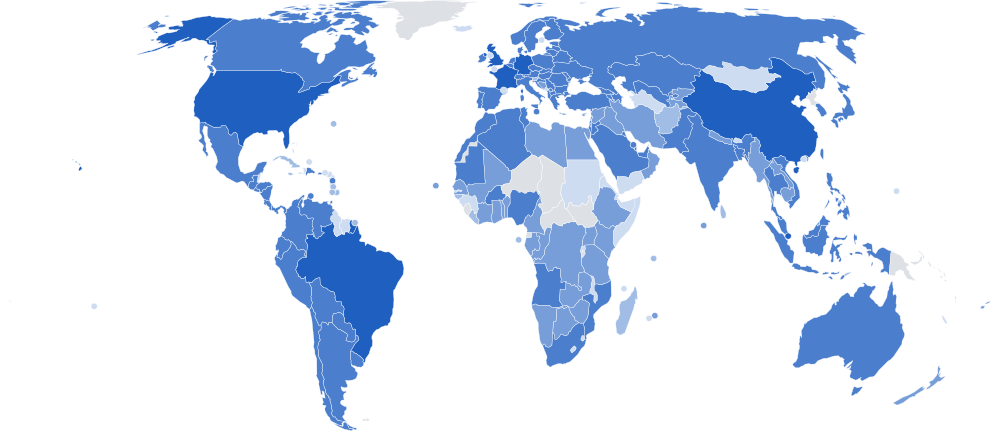
§ 3. Institutional access records for the editorial platform demonstrate the journal's international circulation. According to the OJS report provided by the institution, the following figures were recorded:
I – Accesses originating from 193 countries;
II – 175,532 unique accesses;
III – 75,532 accesses originating from the United States;
IV – 32,924 accesses originating from Brazil;
V – 11,789 accesses originating from Singapore;
VI – 11,351 accesses originating from China;
VII – 6,515 accesses originating from Germany.
§ 4. During the reporting period, accesses originating from the United States represented approximately 2.29 times the volume recorded in Brazil.
§ 5. Geographical indicators shall be used as evidence of the international scope of the awarding institution, with due consideration given to their respective sources, reporting periods, and data collection methodologies.
§ 6. The international scope of the award is further demonstrated by the participation of foreign researchers in the journal's editorial and scientific structure and by the availability of applications to participants from different countries.
CHAPTER II — OBJECTIVES AND PURPOSES
Article 3 – General Objectives
The RCMOS International Scientific Merit Award has the following objectives:
I – To recognize scientific and academic excellence among researchers and authors;
II – To distinguish relevant contributions to the development and dissemination of scientific knowledge;
III – To recognize professionals who contribute to the quality and integrity of peer-review processes;
IV – To value intellectual production of national and international relevance;
V – To promote methodological excellence, originality, and quality in scientific research;
VI – To encourage academic cooperation and the international circulation of knowledge;
VII – To recognize relevant contributions to the scientific community and to the advancement of different fields of knowledge;
VIII – To strengthen a culture of independent, ethical, and technically grounded scientific evaluation.
Article 4 – Institutional Purpose
The award is an academic distinction granted through a formal, merit-based selection process.
Sole Paragraph. The recognition may be included in the recipient's academic and professional record and shall be accompanied by institutional documentation enabling verification of the edition, category, selection criteria, and award decision.
CHAPTER III — OBJECTIVES AND PURPOSES
Article 5 – Official Award Categories
The award shall be organized into the following categories:
I – INTERNATIONAL AUTHORIAL EXCELLENCE AWARD
This category recognizes authors whose scientific publications demonstrate:
a) Intellectual originality;
b) Methodological rigor;
c) Scientific relevance;
d) Effective contribution to the advancement of knowledge;
e) Theoretical and analytical consistency;
f) Academic, professional, or social applicability;
g) Relevance and potential contribution to the respective scientific field.
II – INTERNATIONAL PEER REVIEW EXCELLENCE AWARD
This category recognizes external scientific reviewers who demonstrate:
a) Technical excellence in the preparation of peer-review reports;
b) Depth and consistency of scientific analysis;
c) Ability to identify methodological limitations;
d) Effective contribution to the improvement of submitted manuscripts;
e) Compliance with the principles of research ethics and scientific integrity;
f) Compliance with editorial procedures and deadlines;
g) Relevant contributions to the quality of scientific communication.
Article 6 – Nature of the Award Categories
§ 1. Each category shall have specific evaluation criteria and shall be assessed independently.
§ 2. The same candidate may apply for more than one category, provided that the respective eligibility requirements are met.
§ 3. Receiving an award in one category does not automatically entitle the recipient to recognition in another category.
§ 4. The institution may grant more than one award within each category, provided that candidates achieve the minimum required score and receive approval from the Judging Committee.
§ 5. If no candidate meets the minimum requirements, the institution may decide not to grant the award in the respective category during that annual cycle.
CHAPTER IV – ELIGIBILITY AND INTERNATIONAL PARTICIPATION
Article 7 – Eligible Participants
The following individuals may apply for the award:
I – Researchers and authors with scientific work published by RCMOS during the corresponding award cycle;
II – Authors of scientific manuscripts submitted to RCMOS for editorial evaluation, subject to the specific eligibility conditions of each category;
III – External reviewers who have effectively completed peer-review assignments for RCMOS during the applicable reference period;
IV – Researchers affiliated with national or international academic institutions, if they meet the eligibility requirements established in these Regulations.
Article 8 – Geographical Scope
§ 1. Participation shall not be restricted to Brazilian nationals.
§ 2. Researchers residing in Brazil or abroad may participate, regardless of nationality, native language, or institutional affiliation.
§ 3. Eligibility shall be determined by the candidate's scientific production, academic activity, or documented contribution to the editorial and scientific community of RCMOS.
§ 4. International participants shall be subject to the same evaluation criteria, scoring requirements, and merit standards applicable to domestic participants.
§ 5. No automatic preference or additional scoring shall be granted based on nationality or country of residence.
Article 9 – Documentation Requirements
Candidates shall submit, when requested:
I – Personal and academic identification;
II – Academic or professional curriculum vitae;
III – Identification of scientific publications or completed peer-review activities;
IV – ORCID identifier, when available;
V – Information regarding institutional affiliation;
VI – Any additional documentation required for the assessment of the application.
CHAPTER V – ANNUAL CYCLE AND APPLICATION PROCEDURES
Article 10 – Annual Frequency
The award shall be granted through an annual cycle corresponding to an officially established evaluation period.
Article 11 – Annual Schedule
At the beginning of each cycle, RCMOS shall publish an official schedule containing:
I – Opening of applications;
II – Period for receiving applications and verifying documentation;
III – Eligibility assessment;
IV – Technical evaluation;
V – Deliberation by the Judging Committee;
VI – Institutional ratification;
VII – Announcement of results;
VIII – Issuance of official declarations and certificates.
Article 12 – Formal Application
§ 1. Applications shall be formally submitted through the institutional channels made available by RCMOS.
§ 2. Candidates shall indicate the intended award category and submit the documentation required for evaluation.
§ 3. An application shall only be considered eligible after verification of the applicable documentary and substantive requirements.
§ 4. The institution may request clarifications or additional documentation during the assessment process.
Article 13 – Free Application and Independence of Selection
Applications and evaluations for the RCMOS International Scientific Merit Award shall be free of charge.
§ 1. The sale of awards, rankings, favorable decisions, or distinctions shall not be permitted.
§ 2. The granting of an award shall depend exclusively on compliance with eligibility requirements and the assessment of the applicable merit criteria.
§ 3. No payment, publication agreement, purchase of editorial services, or commercial relationship shall influence the decision of the Judging Committee.
§ 4. The institution may establish administrative procedures for issuing additional documents, provided that such procedures do not interfere with the selection process or the granting of the distinction.
CHAPTER VI – EVALUATION METHODOLOGY AND SCORING SYSTEM
Article 14 – Evaluation System
Applications shall be evaluated through a technical scoring system known as the Score-Based Academic Merit Assessment, designed to ensure uniform, objective, and verifiable evaluation criteria.
§ 1. Each application shall be assessed according to the requirements of its respective category.
§ 2. The criteria, weighting, minimum score, and classification parameters shall be disclosed before the application period closes.
§ 3. The evaluation shall consider the scientific merit and the demonstrated contribution of each candidate.
Article 15 – Evaluation Matrix for the International Authorial Excellence Award
The International Authorial Excellence Award shall be assessed according to the following scoring distribution:
|
Evaluation Criterion |
Points |
|
Methodological rigor and scientific consistency |
25 |
|
Originality and intellectual innovation |
20 |
|
Scientific relevance and contribution |
20 |
|
Quality of theoretical and analytical foundations |
15 |
|
Academic, social, or professional applicability and impact |
10 |
|
Contribution to the advancement of the respective field |
10 |
|
Total |
100 |
Article 16 – Evaluation Matrix for the International Peer Review Excellence Award
The International Peer Review Excellence Award shall be assessed according to the following scoring distribution:
|
Evaluation Criterion |
Points |
|
Depth and technical quality of peer-review reports |
25 |
|
Ability to assess scientific and methodological aspects |
20 |
|
Contribution to manuscript improvement |
20 |
|
Consistency and substantiation of recommendations |
15 |
|
Ethics, impartiality, and confidentiality |
10 |
|
Compliance with editorial procedures and deadlines |
10 |
|
Total |
100 |
Article 17 – Classification and Minimum Score
§ 1. The minimum qualifying score for consideration for an award shall be 80 out of 100 points.
§ 2. Achieving the minimum score does not automatically guarantee an award; it remains subject to collegiate deliberation.
§ 3. Candidates shall be ranked according to their scores and the assessment conducted by the Judging Committee.
§ 4. In the event of a tie, the criteria carrying the highest weighting in the respective category shall be considered successively.
§ 5. The Judging Committee shall provide documented grounds for any exceptional decision concerning classification, while respecting the criteria previously disclosed.
CHAPTER VII – THE INTERNATIONAL JUDGING COMMITTEE
Article 18 – Composition
The Judging Committee of the RCMOS International Scientific Merit Award shall be composed of the entirety of the members formally listed on the RCMOS International Editorial Board.
§ 1. The International Editorial Board shall exercise the institutional and collegiate function of the award's judging body.
§ 2. All members formally identified as members of the International Editorial Board shall form part of the Judging Committee, subject to the rules governing conflicts of interest, independence, and participation established in these Regulations.
§ 3. The composition of the Judging Committee shall be identified on an official institutional webpage, including the names and academic and professional qualifications of its members, based on available records.
§ 4. The composition shall be updated whenever changes are made to the International Editorial Board.
Article 19 – International Composition of the Judging Committee
The Judging Committee has an international character by virtue of its connection to the RCMOS International Editorial Board and the participation of researchers based in Brazil and other countries.
§ 1. Whenever documented, the institutional composition shall identify:
I – Member's full name;
II – Country of residence or professional activity;
III – Institutional affiliation;
IV – Academic qualifications;
V – Area of specialization;
VI – Academic identifiers and available professional or academic curricula.
§ 2. The Board's geographical and scientific diversity shall constitute an element of international representation within the award's judging structure.
Article 20 – Duties and Responsibilities of the Judging Committee
The Judging Committee shall be responsible for:
I – Examining eligible applications;
II – Applying the evaluation criteria established in these Regulations;
III – Assessing the quality and relevance of scientific contributions;
IV – Assigning scores to candidates;
V – Deliberating on the final classification;
VI – Deciding whether awards shall be granted or withheld;
VII – Recording decisions in formal minutes;
VIII – Observing the principles of independence, impartiality, and scientific integrity;
IX – Ensuring consistent application of evaluation criteria to domestic and international candidates.
Article 21 – Participation and Deliberation
§ 1. All members of the International Editorial Board shall have institutional standing to participate in the Judging Committee.
§ 2. Record participation in deliberations for each award edition, identifying the members who effectively participated in the assessment and voting.
§ 3. Deliberations may take place through in-person meetings, videoconferences, or documented institutional electronic procedures.
§ 4. A valid deliberation requires a quorum of an absolute majority of eligible voting members.
§ 5. Decisions shall be made by a simple majority of valid votes cast by participating members, subject to the established quorum.
§ 6. Abstentions and conflict-of-interest exclusions shall be recorded in the official minutes.
§ 7. The final decision shall be recorded in formal minutes identifying the edition, award category, participating members, and outcome.
Article 22 – Conflicts of Interest
§ 1. Members of the Judging Committee shall disclose any potential conflict of interest involving a candidate or application.
§ 2. Circumstances that may constitute a conflict of interest include:
I – Participation as an author or co-author of the work under evaluation;
II – A direct academic supervisory relationship with the candidate;
III – A professional or commercial relationship that may compromise the independence of the decision;
IV – A personal relationship that may affect impartiality;
V – A direct interest in the outcome of the evaluation.
§ 3. A member subject to a conflict of interest may remain a member of the International Editorial Board but shall not participate in the evaluation, scoring, or voting concerning the relevant application.
§ 4. All exclusions arising from conflicts of interest shall be recorded in the official minutes.
Article 23 – Independence of the Judging Committee
Members of the Judging Committee shall exercise their responsibilities with technical autonomy and decision-making independence, without subordination to the private interests of candidates.
Sole Paragraph. The editorial management shall not arbitrarily alter scores or collegiate decisions that have been duly recorded in accordance with these Regulations.
CHAPTER VIII – SELECTIVITY AND COMPETITIVE NATURE
Article 24 – Competitive Nature of the Award
The RCMOS International Scientific Merit Award is competitive in nature and shall be granted through the technical comparison of eligible applications and the assessment of academic merit.
Article 25 – Selectivity Indicators
At the end of each annual cycle, the institution shall record:
I – Total number of applications received;
II – Total number of eligible applications;
III – Total number of applications evaluated;
IV – Total number of approved candidates;
V – Total number of awards granted;
VI – Geographical distribution of applicants, when available;
VII – Distribution of award recipients by category;
VIII – Annual selectivity rate.
Article 26 – Calculation of the Selectivity Rate
The selectivity rate shall be calculated by comparing the number of awards effectively granted with the number of eligible applications submitted for evaluation.
Formula:
Selectivity Rate = (Number of Awards Granted ÷ Number of Eligible Applications Evaluated) × 100.
§ 1. The institution shall expressly identify the denominator used in calculating the selectivity rate.
§ 2. The percentage shall correspond to the actual records of each edition.
§ 3. Estimated or undocumented selectivity rates shall not be published as confirmed results.
CHAPTER IX – TRANSPARENCY, PUBLICATION, AND INSTITUTIONAL RECORDS
Article 27 – Official Announcement of Results
The institution shall publish results on the official RCMOS institutional webpage, identifying the annual cycle, award categories, and respective recipients.
Article 28 – Annual Report
The institution shall prepare an annual report containing:
I – Identification of the award edition;
II – Official schedule;
III – Composition of the Judging Committee;
IV – Number of applications received;
V – Number of eligible applications;
VI – Number of applications effectively evaluated;
VII – Number of awards granted;
VIII – Selectivity rate;
IX – Geographical distribution of applications, when documented;
X – Results by award category;
XI – Record of the final deliberation.
Article 29 – Institutional Traceability
RCMOS shall maintain institutional records enabling verification of:
I – The existence of the award;
II – The validity and effective period of these Regulations;
III – The composition of the Judging Committee;
IV – The application process;
V – The evaluation criteria;
VI – Collegiate deliberations;
VII – The identity of award recipients;
VIII – The corresponding edition and award category.
Sole Paragraph. Documents may be made available in digital format, subject to applicable data protection requirements and the confidentiality of editorial procedures.
CHAPTER X – RECOGNITION AND DOCUMENTATION OF AWARD RECIPIENTS
Article 30 – Official Award Documentation
Award recipients shall receive:
I – An Official International Certificate of Scientific Merit;
II – An Institutional Declaration Confirming the Award;
III – Public recognition on the official award webpage;
IV – Inclusion in the annual record of award recipients;
V – Identification of the corresponding award category and edition.
Article 31 – Certificate Requirements
The certificate shall contain:
I – Full name of the recipient;
II – Official name of the award;
III – Award category;
IV – Edition and year;
V – Awarding institution;
VI – Journal ISSN;
VII – Date of issuance;
VIII – Signature of the competent institutional authority;
IX – Verification code or other document authentication mechanism, when available.
Article 32 – Individual Award Declaration
The individual declaration may include:
I – Identification of the award;
II – Award category;
III – Technical justification for the recognition;
IV – Evaluation criteria applied;
V – Score obtained, when disclosure is authorized;
VI – Identification of the Judging Committee;
VII – Identification of the award edition;
VIII – Reference to the official verification webpage.
CHAPTER XI — ETHICS, INTEGRITY, AND INSTITUTIONAL RESPONSIBILITY
Article 33 – Ethical Principles
The award shall observe the following principles:
I – Scientific merit;
II – Transparency;
III – Impartiality;
IV – Independence;
V – Academic integrity;
VI – Equal treatment;
VII – Institutional responsibility;
VIII – Confidentiality of evaluation procedures;
IX – Respect for scientific and academic diversity.
Article 34 – Integrity of Applications
Submitting false information, falsified documents, or misleading statements may result in disqualification of an application or, if discovered after the award has been granted, reasoned revocation of the distinction.
Article 35 – Revocation of Awards
The revocation of an award shall be preceded by a documented procedure, ensuring the recipient an opportunity to provide an explanation or defense.
The decision shall be reasoned and formally recorded by the institution.
CHAPTER XII — ACADEMIC AND PROFESSIONAL RECOGNITION
Article 36 – Nature of the Recognition
The RCMOS International Scientific Merit Award constitutes an institutional distinction for scientific and academic merit, granted through a competitive process, technical evaluation, and collegiate deliberation.
Article 37 – Professional Use of Award Documentation
Award documentation may be included in academic curricula vitae, professional portfolios, scientific records, institutional recognition submissions, and other proceedings in which the recipient wishes to present their academic and professional achievements.
§ 1. RCMOS may provide supplementary institutional information concerning the award, its organizational structure, methodology, composition of the Judging Committee, and historical records of previous editions.
§ 2. The institution does not guarantee automatic acceptance of the award by governmental authorities, foreign institutions, immigration authorities, or professional organizations.
§ 3. The assessment of the legal and evidentiary relevance of the distinction shall remain the responsibility of the authorities and professionals evaluating each proceeding.
§ 4. Institutional documentation shall accurately reflect the facts, criteria, and procedures effectively implemented in each edition.
CHAPTER XIII — INTERNATIONAL IDENTITY AND PUBLIC AVAILABILITY
Article 38 – Official Identity
The official designation of the award shall be:
RCMOS INTERNATIONAL SCIENTIFIC MERIT AWARD
Article 39 – Multilingual Publication
These Regulations shall be made available in English and Portuguese, and the institution may publish additional language versions.
§ 1. All language versions shall preserve the same criteria, eligibility requirements, and regulatory procedures.
§ 2. In the event of any interpretative discrepancy, the Portuguese version shall prevail, unless otherwise expressly established by institutional provision.
Article 40 – Historical Archive
RCMOS shall maintain a public historical archive of completed award editions, containing, as applicable and supported by available records:
I – Year of the award edition;
II – Applicable regulations;
III – Award categories;
IV – Composition of the Judging Committee;
V – Official results;
VI – Award recipients;
VII – Annual reports;
VIII – Relevant institutional records.
CHAPTER XIV – FINAL PROVISIONS
Article 41 – Institutional Responsibility
Aluz Academic Publishing House, as the publishing institution responsible for RCMOS, shall ensure the administrative and documentary infrastructure needed to organize and implement the award.
Article 42 – Matters Not Expressly Addressed
Matters not expressly addressed in these Regulations shall be examined by the RCMOS International Editorial Board, in accordance with the principles and provisions established herein.
Article 43 – Effective Date
These Regulations shall enter into force on the date of their official publication and shall apply to subsequent annual award cycles, subject to the specific provisions established for each edition.
Article 44 – Amendments to the Regulations
Any amendment to these Regulations shall be institutionally approved, officially published, and applied prospectively, in accordance with the principles of legal certainty and transparency in the selection process.
FINAL PROVISIONS
INSTITUTIONAL APPROVAL
This Regulation follows its formal approval by the competent institutional authority of RCMOS – Multidisciplinary Scientific Journal of Knowledge.
SAO PAULO, BRAZIL

Bárbara Aline Ferreira Assunção
President of the Editorial Board
RCMOS – Multidisciplinary Scientific Journal of Knowledge
ALUZ ACADEMIC PUBLISHING HOUSE








 © RCMOS. Articles published under the
 Member of ABEC Brasil (Brazilian Association of Scientific Editors)
